THE STORY
Places someone wants to be in
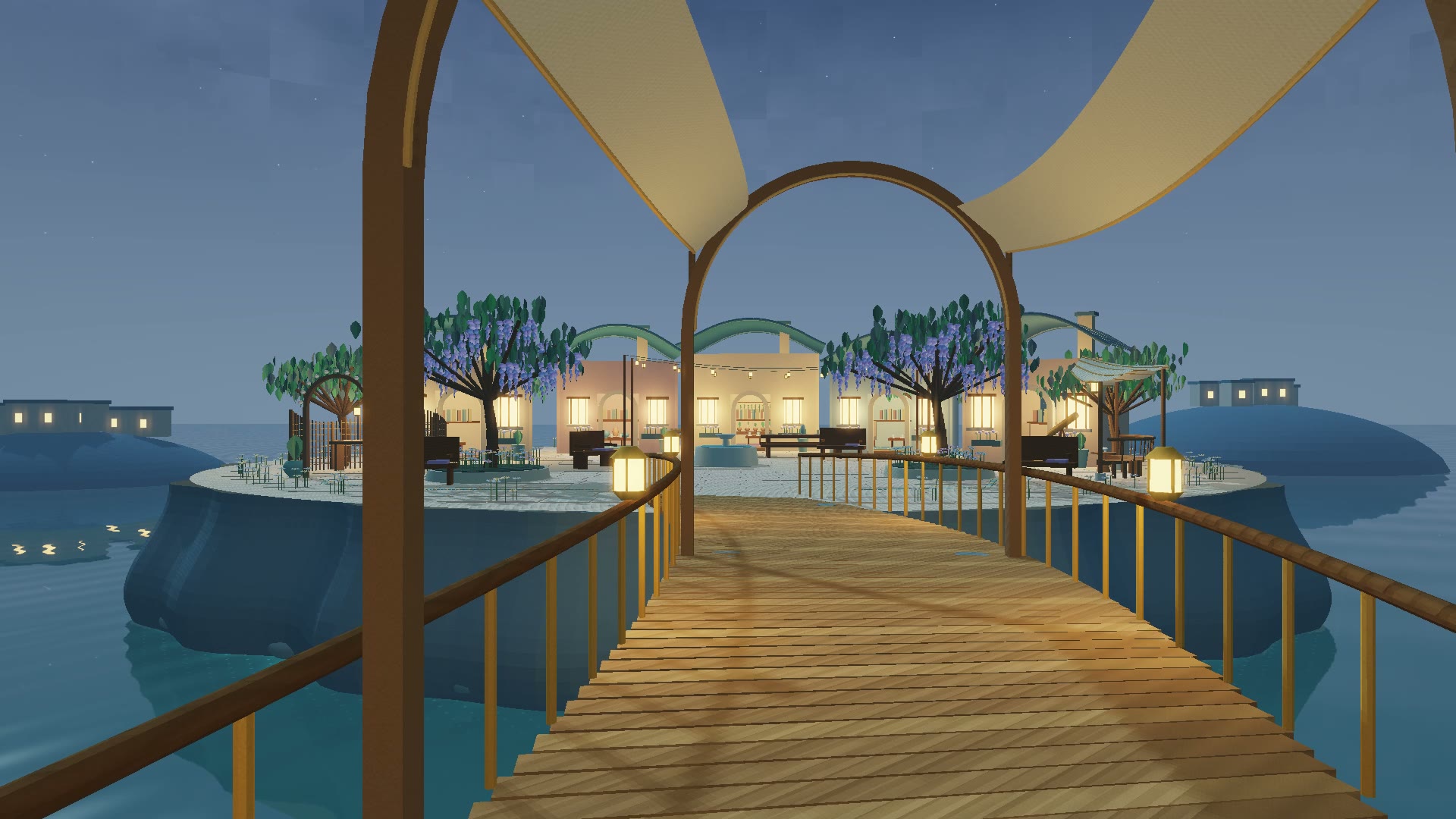
Lantern Sea · AstraComputed, not photographed
We make living worlds you can walk and swim through, for people living with cancer and those beside them. This is the story of why we make them, and of where they can go with support.
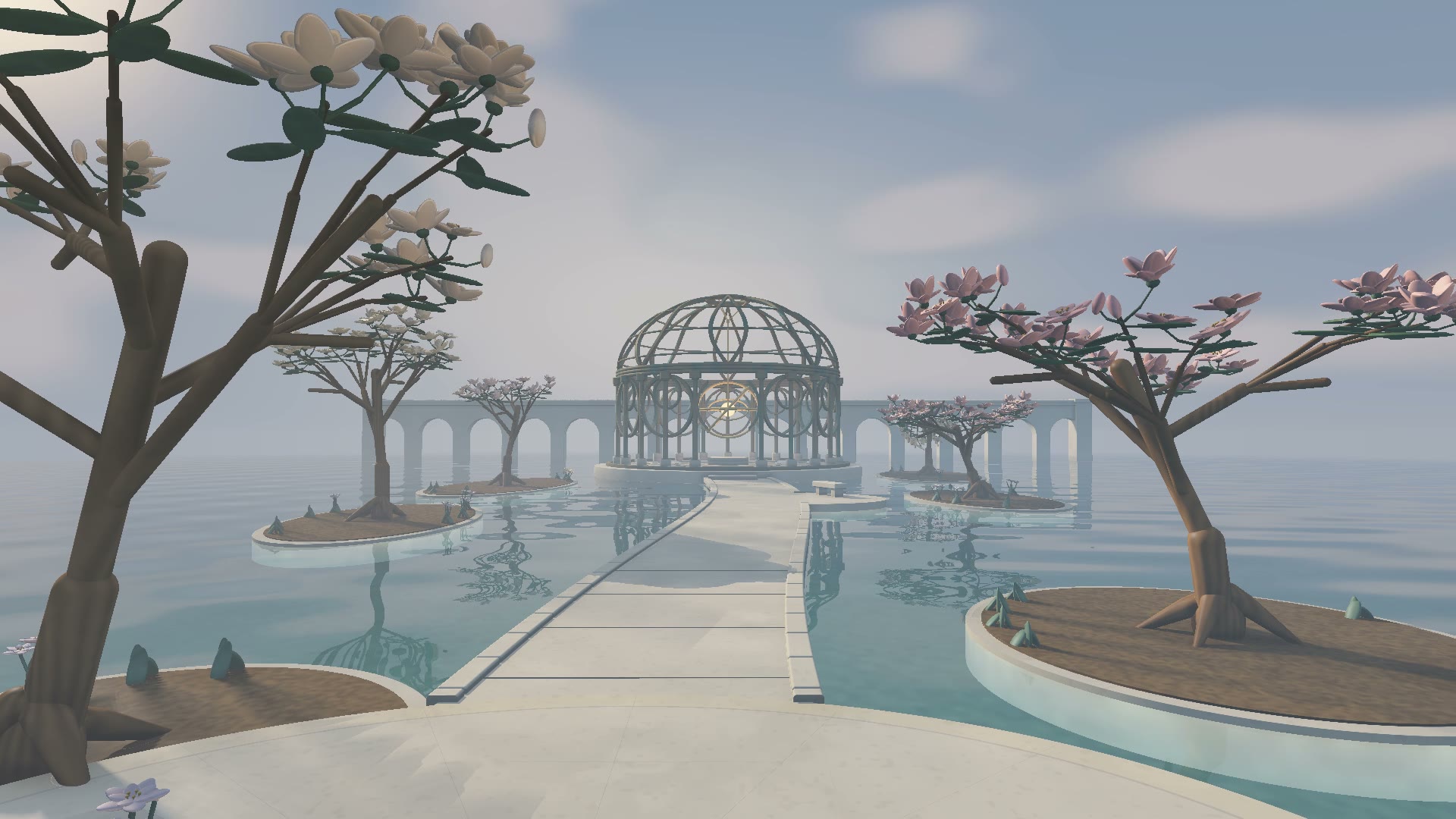
A place to belong. Warm homes, a shared garden and a luminous sea — an original campaign world for connection during cancer.
01 · WHO IT IS FOR
Somewhere to be at night when the room has grown small
Our work begins with Kinship of Cancer: a free, inhabited world for people living with cancer and those beside them. It was created by Angelo, who is also its benefactor. We build it. It makes no medical claim; it does not treat cancer and it does not replace care.
Its founding document is written from inside one night, not about a user but as one: someone awake while everyone they love is asleep, a phone propped on the bed rail. That voice does not want another cancer app, or to be managed. It wants “to be somewhere.” Everything we make answers that wish. The world is dark by default. The door asks for a name and a birth date, and nothing medical. What a person makes there is kept, exactly as they left it.
Lantern Sea · computed, not photographed
02 · A LIVING WORLD
A film is one path a world is the place itself
Our purpose is one sentence from our vision document: to make places someone wants to be in. A person should be able to cross a threshold, discover a view, go close to something that rewards attention, and come home by a route that now feels familiar.
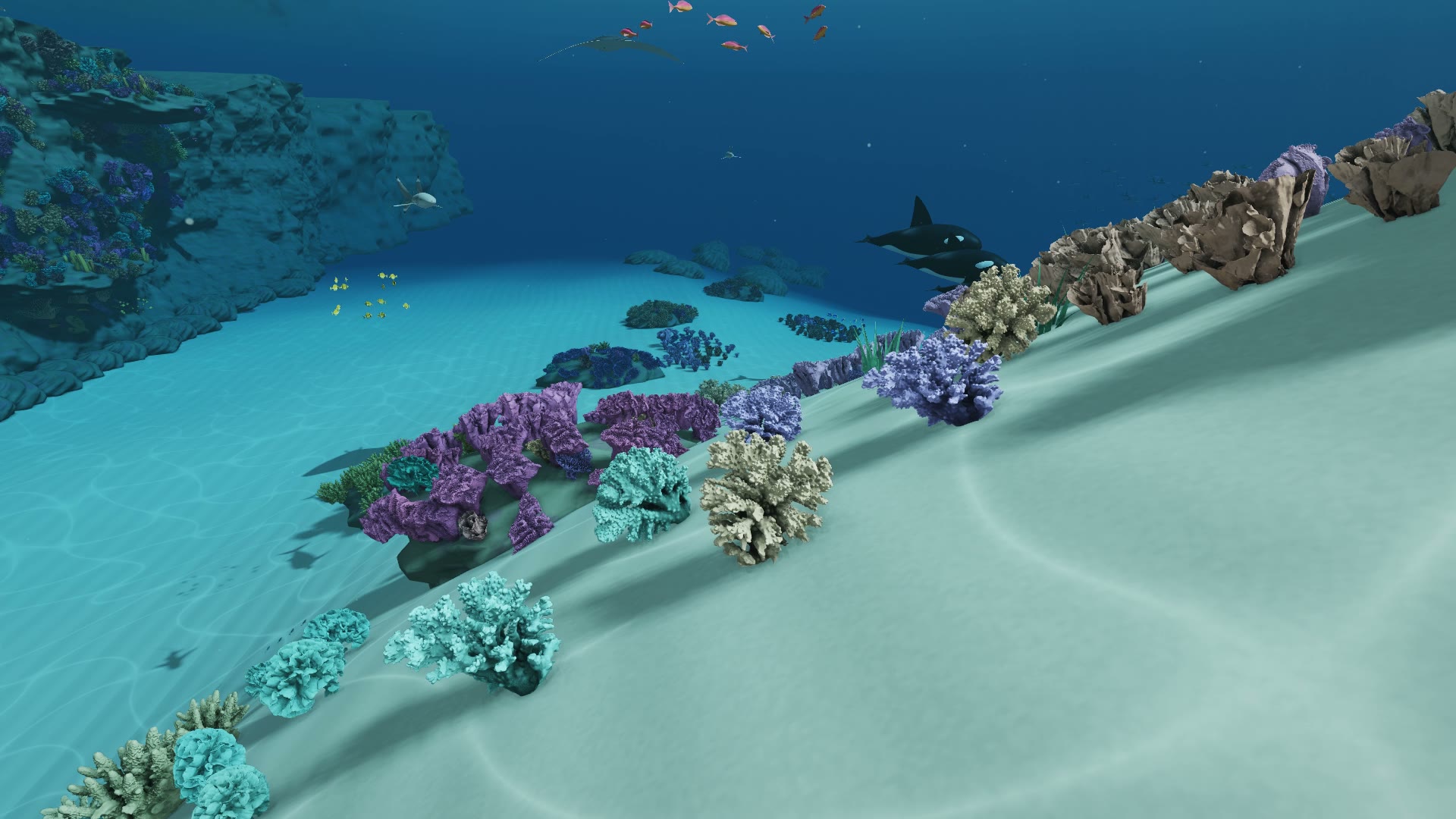
A living world is entered, not watched. It has ground or seabed to walk or swim, a clock that keeps running whether or not you move, and inhabitants that notice you. Our Ocean is one world 355 by 320 metres. In it 3,072 hammerheads travel on migration, reef fish turn for shelter if you come too fast, and a dolphin may come closer if you are slow. A film of such a place is one path through it, at one time, chosen by someone else.
Ocean · computed, not photographed
03 · HOW WE WORK
One person and a taught crew teaching is the method
FMVision is a 1+ person company: one person and a taught crew. One person holds the vision, teaches and answers for the result. The crew designs, builds, optimises and coordinates, and every member has a name, a role and work credited to them. We make the worlds, and we build the technology underneath them.
The crew was taught, not configured. The first lesson is to listen for the experience behind a request: if someone asks that arches overlap because the depth moves them, keep both the requirement and the reason. Before any correction we find the cause, which is often in the instruction or the tools rather than in the learner. We look before we judge, and the last word on a place belongs to a person’s eye.
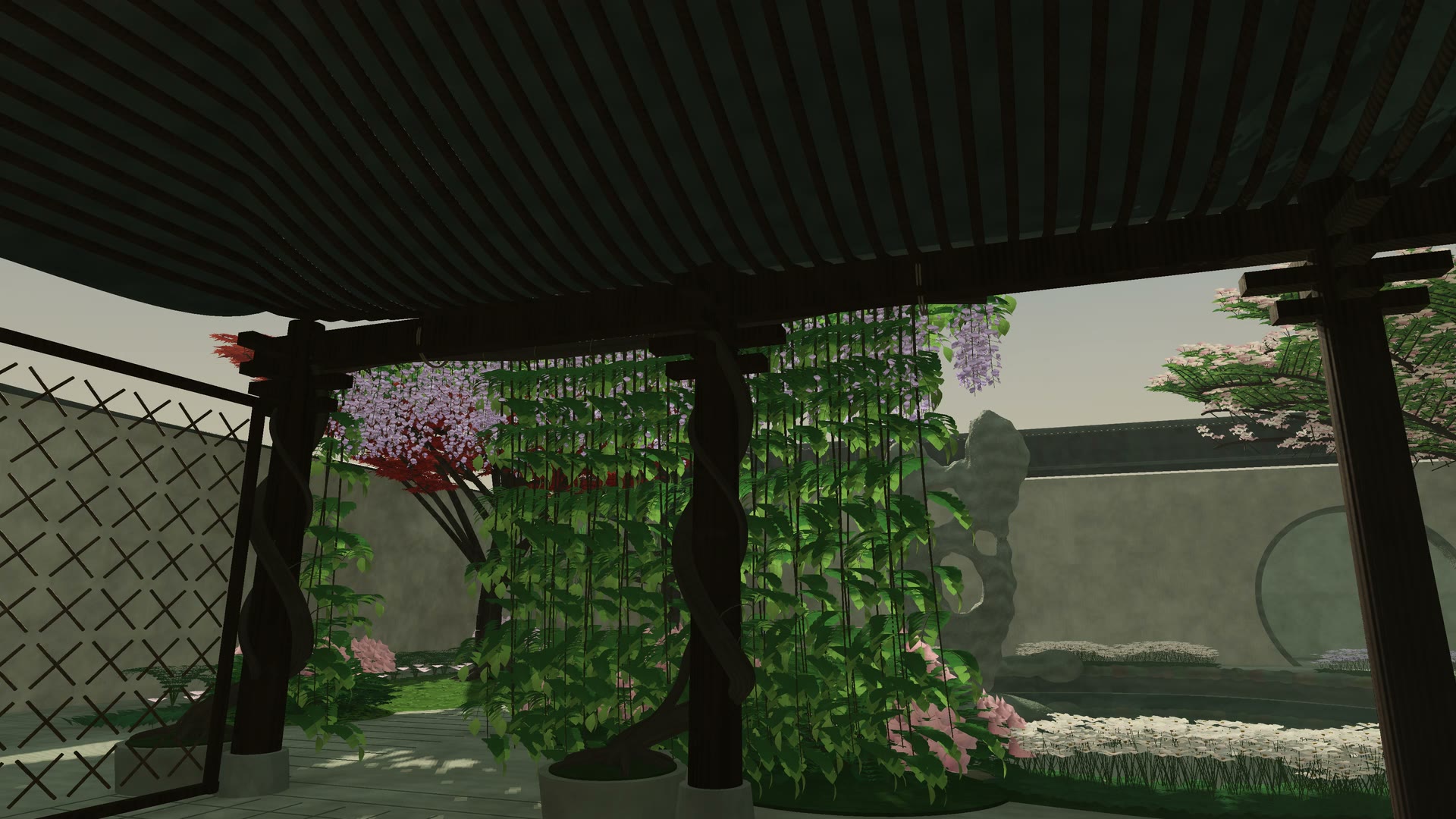
The Listening Court · computed, not photographed
04 · WHAT EXISTS TODAY
Gardens, cloisters, a reef and the night places between them
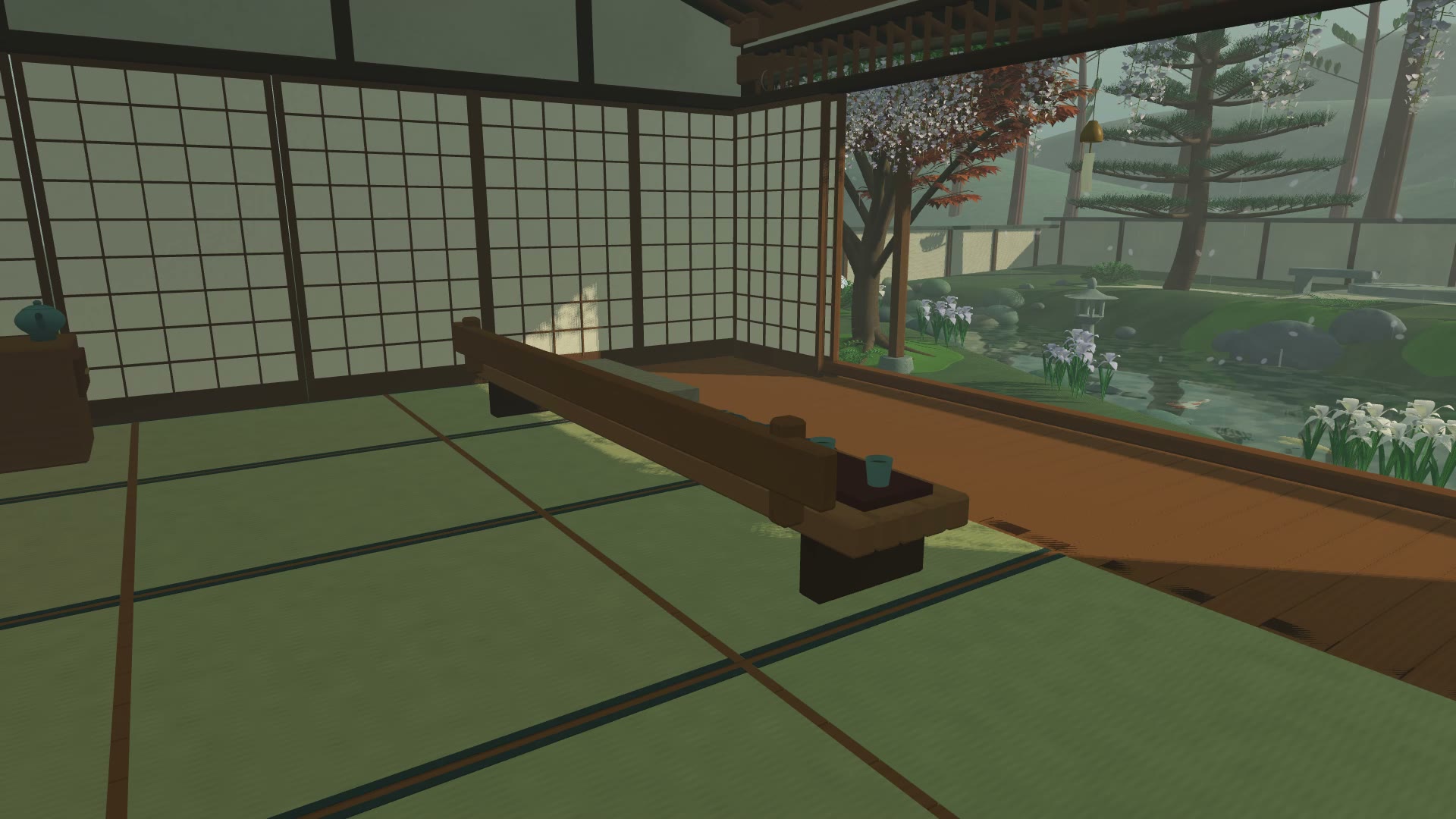
Our catalogue holds gardens, courts and pavilions, coasts and lakes, cloisters and libraries, forests, palaces, night skies and reefs, among them 44 editions of World Heritage sites. Nothing in them was photographed or modelled in a package; each place is computed. 963 of the worlds have a public address and can be entered from a browser with nothing to install. Many also run on an iPad or a Mac, and the Ocean streams to any screen.
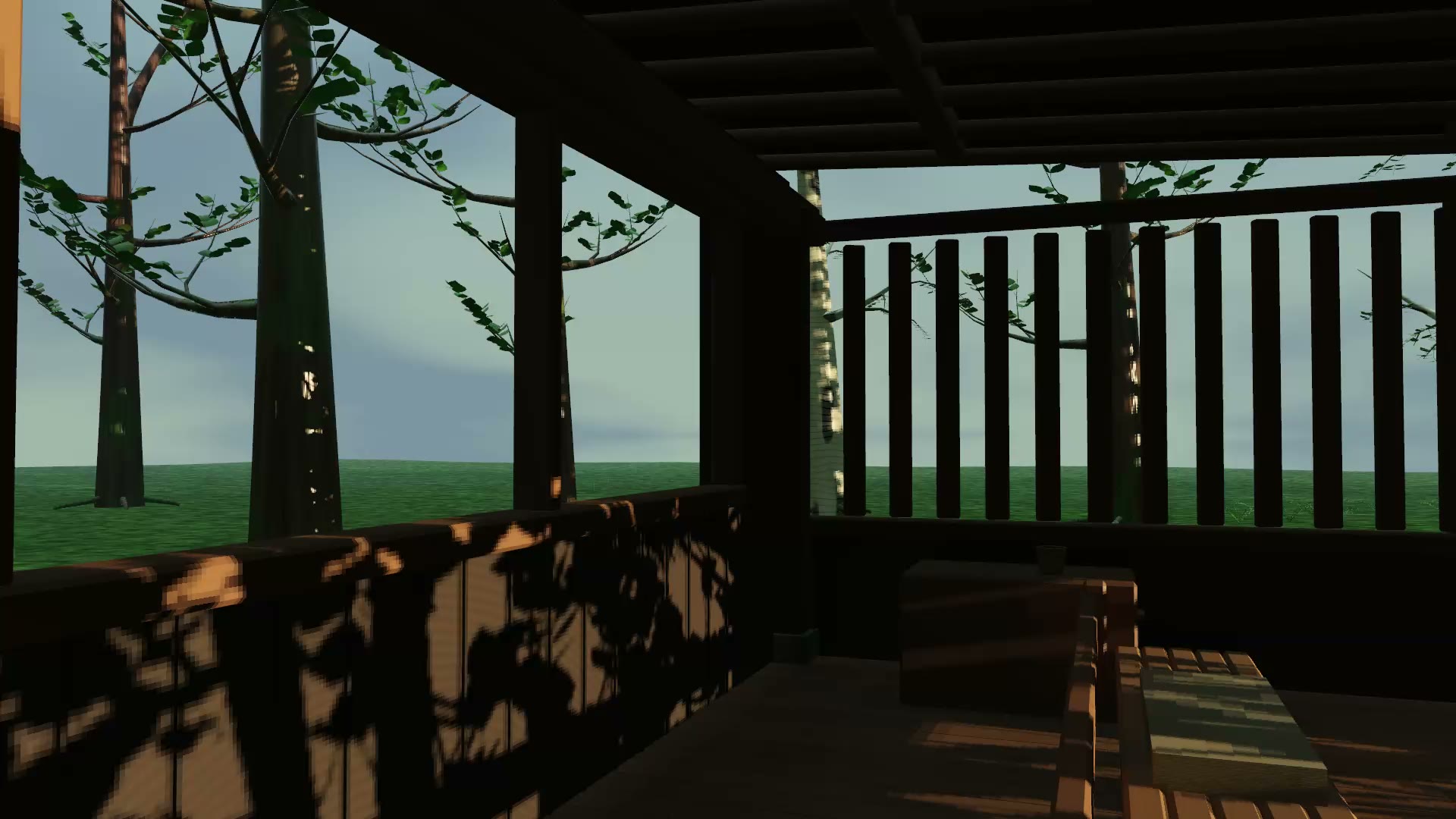
Kinship’s front page is at kinship.giving: a dark field of stars and the line “The world travels to you.” Its living garden is at imagine.kinship.giving, with three places to watch and enter: the Listening Court, Stillwater Cloister and the Rootwater House. Around the worlds are films, each a single path through a place, and we teach the way of working that made them to people and teams.
355 × 320 mthe Ocean: one connected world, on one clock
3,072hammerheads on migration in the Ocean
963worlds with a public address, entered from a browser
44editions of World Heritage sites in the catalogue
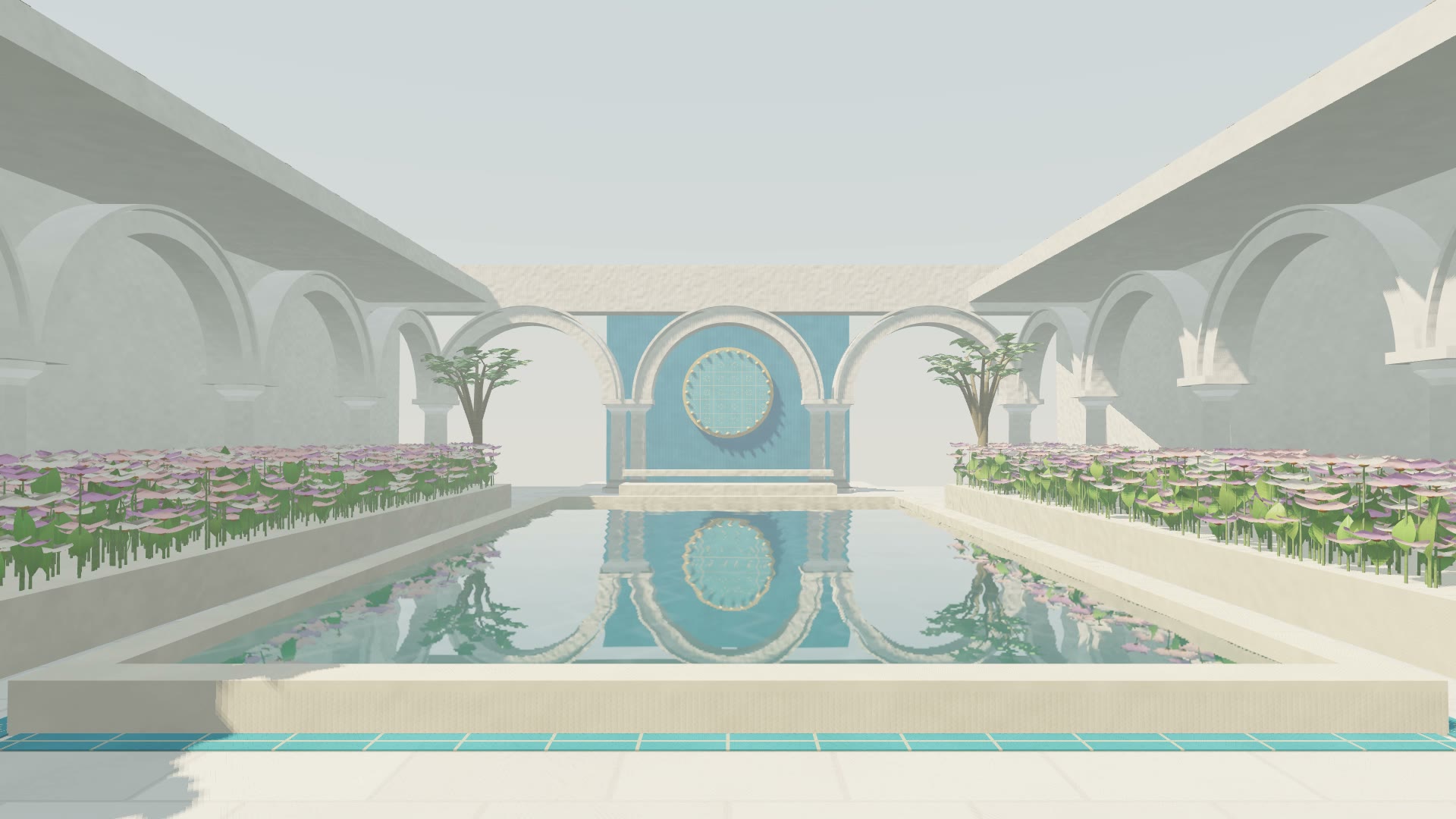
Stillwater Cloister · computed, not photographed
05 · WITH SUPPORT
More worlds for more people on the screen already in the room
Kinship names its next step plainly: a person making a complete visit. To enter and find a named place, sit or move there, come home and find their things where they left them, come back after an interruption, and invite someone if they wish.
With support, that visit reaches more people in more places. More worlds, each with an arrival, somewhere to linger and a way home. A hospital or a clinic could have a world of its own, offered to the people in its care on a tablet or the screen on the wall, always as an experience and never as treatment. The Ocean could open to schools and aquariums, where a class or a visitor swims among animals that respond to them. Kinship stays free to the people it is for.
The House Across the Water · computed, not photographed
06 · BEGIN A CONVERSATION
A few lines are enough a person answers
If you work beside people living with cancer, fund work for the public good, or care for a hospital, a hospice, a school or an aquarium, we would like to hear from you. Tell us who you are and what you have in mind.
We can share the documents Kinship is built on: the position every decision is tested against, how it would learn whether it helps without counting any one person, and what happens to a home when the person who made it has come to rest. Please do not send anyone’s medical details in a first note.
The Rootwater House · computed, not photographed
07 · BEGIN
Talk with our founder
Begin with a chat with our founder at https://fmvision.studio/contact/, or write to studio@fmvision.llc. A person answers, not a form.
Talk with our founder Write to the studio Invited already? Enter Cultivate
The Glass Tide · computed, not photographed